
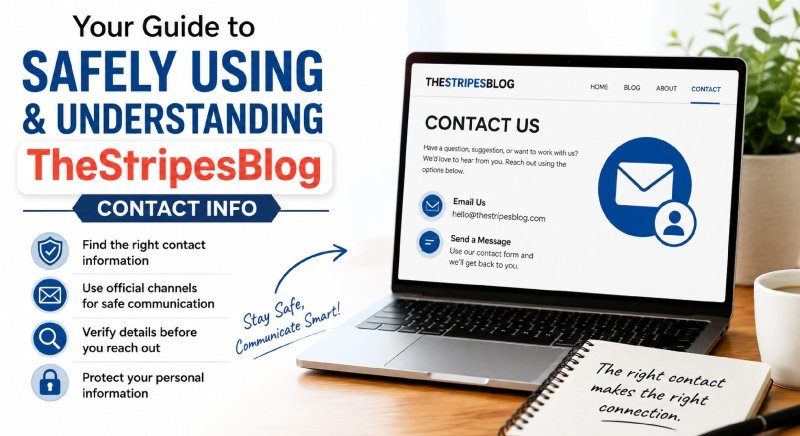
Finding the right contact information for a website is not always as simple as it seems. Sometimes you may come across several pages, different email addresses, or contact details shared on third-party websites. If you are looking for TheStripesBlog contact info, taking a few moments to check the source can save you from sending your message to the wrong place.
Whether you want to ask about an article, share feedback, discuss a collaboration, or contact the website for another reason, knowing how to find and use the correct contact channel makes the process much easier.
Why Contact Information Is Important
A website’s contact information gives readers a direct way to communicate with the people behind the site. It can be useful for many different reasons. A reader may have a question about something published on the website, while a business or writer may want to discuss a possible opportunity.
Good contact information also makes a website easier to approach. When visitors can quickly find a contact page or form, they do not have to spend unnecessary time searching through unrelated pages.
For websites that publish content regularly, this communication can be particularly useful. Readers can report an issue, point out an outdated detail, provide feedback, or simply ask for clarification about an article.
Finding TheStripesBlog Contact Info
When searching for TheStripesBlog contact info, the best place to start is the website itself. Look for a page labelled Contact, Contact Us, or something similar. Many websites place this option in the main navigation menu or at the bottom of the homepage.
Using the website’s own contact page is generally a better option than copying an email address from a random directory or another website. Third-party pages can contain old information, incorrect details, or information that has been copied without verification.
Before contacting the site, check the domain name carefully. This small step can help you avoid confusing TheStripesBlog with another website using a similar name.
What Contact Information May Include
A website can provide several ways for visitors to get in touch. The most common options include an email address and an online contact form. An email address is convenient when you have a detailed question or business inquiry. You can explain your request in your own words and include any relevant links.
A contact form can be even simpler. Instead of opening an email application, visitors can usually enter their name, email address, subject, and message directly on the website. The exact contact options can change over time, so it is better to check the current contact page rather than depending on an old article or previously published information.
How to Verify Contact Information
Finding an email address online does not automatically mean that it is an official contact method. Before sending an important message, take a moment to verify where the information came from. Start by checking whether the details appear on the website’s own contact page. If an email address is listed there, compare its domain with the website you are visiting.
You should also be careful with contact details found on unrelated websites. A third-party article may have copied information from an older version of the site, meaning that the details may no longer be accurate. Another useful step is to look at the website’s overall contact page. A legitimate contact page will normally explain what kind of inquiries it accepts and provide a straightforward way for visitors to send their message.
Be Careful With Personal Information
Contacting a website should not require you to reveal more personal information than necessary. For a normal inquiry, your name, email address, and message are usually enough. Avoid sending passwords, banking information, identification documents, or other sensitive details unless there is a legitimate and clearly explained reason.
Be especially cautious if someone claiming to represent a website suddenly asks for confidential information through an unexpected email. When in doubt, return to the website yourself and use its publicly listed contact method to verify the request.
Writing a Good Message
Once you have found the correct TheStripesBlog contact info, the next step is writing a clear message. There is no need to make the email unnecessarily long. Start by explaining who you are and why you are contacting the website. If your question is about a particular article, mention its title or include the relevant page.
For a collaboration request, briefly explain what you are proposing and provide any useful information that can help the recipient understand your idea. A simple and professional message is usually more effective than a long introduction that takes several paragraphs to reach the main point.
Contacting TheStripesBlog About an Article
Readers sometimes need to contact a website because they have noticed a mistake, have a question about published information, or want to provide feedback. In this situation, make your message specific. Instead of saying only that an article has a problem, mention the article title and explain exactly what caught your attention.
This gives the website team enough context to understand the issue without having to guess which page you are referring to.
Contact Information Can Change
One thing worth remembering is that online contact information is not permanent. Websites can change email addresses, redesign their contact pages, move to a different domain, or introduce new communication methods.
That is why an old article should not always be treated as the final source of truth. If you are searching for TheStripesBlog contact info, check the current website before relying on information published elsewhere. This is particularly important if you are planning to send a business proposal or other important communication.
Final Thoughts
Finding and using TheStripesBlog contact info does not have to be complicated. Start with the website’s official contact page, verify the domain, and make sure the information comes from a trustworthy source. Once you have confirmed the correct contact method, keep your message short, clear, and relevant.
Avoid sharing unnecessary personal information and be cautious with unexpected requests for sensitive details. A little verification before sending a message can make online communication safer and help ensure that your inquiry reaches the right place.
