
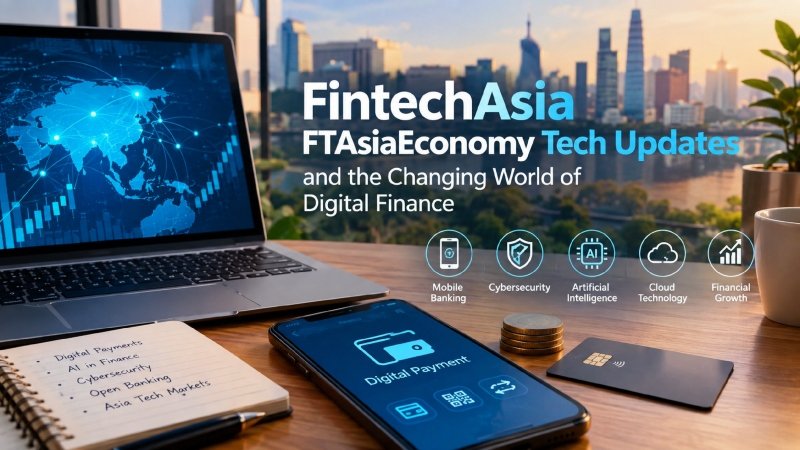
The financial world has changed a lot in the last few years. People now use their phones for payments, online shopping, money transfers, banking, and even managing small businesses. What once required a visit to a bank can often be completed within a few minutes through a mobile application. This change is especially noticeable across Asian markets, where digital services continue to become a bigger part of everyday life.
This is where fintechasia ftasiaeconomy tech updates become an interesting topic for anyone following technology and business. Fintech is no longer limited to large banks or financial companies. It has become connected with e-commerce, mobile applications, artificial intelligence, online businesses, cybersecurity, and many other areas of technology.
Digital Payments Are Becoming Part of Everyday Life
One of the easiest ways to see the growth of financial technology is through digital payments. Cash is still used widely in many places, but digital payment options have become much more convenient for everyday purchases.
People can now pay through mobile wallets, banking apps, QR codes, cards, and online payment platforms. A customer can buy something from a local store or an online business without needing to carry cash.
For businesses, digital payments can also make transactions easier to manage. Online sellers can receive payments from customers, while small businesses can use digital tools to keep better track of their sales and transactions.
Artificial Intelligence Is Changing Financial Services
Artificial intelligence is another technology receiving a lot of attention in the financial sector. Banks and fintech companies are exploring AI for different purposes, including customer support, fraud detection, data analysis, and automation.
For example, financial platforms can use automated systems to identify unusual transactions. If a transaction looks different from a customer’s normal activity, the system may flag it for further checking.
AI can also help customer service teams deal with common questions. Instead of waiting for an employee to respond, customers may receive an instant answer through an automated support system.
However, AI is not a solution to every financial problem. Companies still need to check how these systems work, protect customer information, and make sure important decisions are handled responsibly.
Fintech Is Helping Small Businesses
Financial technology is not only useful for major companies. Small businesses and independent workers can also benefit from new digital tools.
A small online seller may need a simple way to accept payments. A freelancer may need to receive money from clients in another city or country. A growing company may need digital accounting or invoicing tools.
These services can save time and reduce some of the work involved in traditional financial management. As more businesses move their operations online, having access to convenient financial technology is becoming increasingly useful.
Security Is Just as Important as Innovation
There is another side to the growth of fintech that cannot be ignored: security. When people store financial information online, protecting that information becomes extremely important. Cybercriminals may target banking accounts, payment platforms, businesses, and individual users.
Because of this, fintech companies continue to focus on security measures such as account verification, encryption, fraud monitoring, and additional login protection. Users also have a role to play. Keeping passwords private, avoiding suspicious links, checking account activity, and using trusted applications are simple steps that can make online financial activity safer.
Better Connections Between Financial Services
Modern fintech also depends on different digital systems working together. APIs, cloud technology, and other software tools allow financial platforms to connect with other services.
This can make it easier for companies to build new products without creating every part of a financial system from the beginning. It can also help businesses connect payment, accounting, banking, and other services in one digital environment.
As these connections improve, customers may have more choices when managing their finances.
Why These Technology Updates Matter
Following fintechasia ftasiaeconomy tech updates is useful because financial technology is changing much more than the way people make payments. It is influencing how businesses operate, how customers interact with financial companies, and how digital services are developed. The changes can also create new opportunities for startups and technology companies.
A simple financial problem can sometimes lead to a new digital service when developers find a faster or more convenient way to solve it. At the same time, companies have to think about regulations, privacy, security, and customer trust. A financial product cannot succeed simply because it uses new technology. People also need to feel comfortable using it.
The Future of Fintech in Asia
The fintech industry is likely to remain an important part of Asia’s technology landscape. Digital payments, artificial intelligence, online banking, automation, and financial applications are continuing to develop.
The most interesting part is that fintech is becoming connected with almost every part of the digital economy. From a small online shop accepting its first digital payment to a large company using AI for financial analysis, technology is changing how money moves and how financial services are delivered.
For readers interested in technology and business, keeping up with fintechasia ftasiaeconomy tech updates can provide a useful view of these changes. The industry will continue to evolve, and the companies that focus on convenience, security, and practical solutions will remain an important part of that development.